Window & Door Screen Repair and Installation in NYC
Window screen repair, custom screen fabrication, patio door screens, retractable screens and specialty mesh.
Manhattan • Brooklyn • Queens • Bronx • Staten Island • Long Island • Westchester
Window & Door Screen Repair and Installation in NYC
NYC Glass & Window Repair provides window screen repair, custom screen fabrication, screen replacement and door screen service throughout New York City. We work with homeowners, tenants, co-ops, condos, property managers, brownstones, high-rise buildings and commercial properties.
Our screen services include re-screening existing frames, custom-made replacement window screens, sliding patio door screens, swinging screen doors, retractable screens, pet-resistant mesh, no-see-um mesh, high-visibility mesh, aluminum and fiberglass screening, screen hardware and selected specialty screen systems.
A screen should fit the actual window or door, not merely approximate its dimensions. Frame size, profile, corner construction, retention hardware, mesh, spline and the way the screen engages the window all affect fit and operation.
We serve Manhattan, Brooklyn, Queens, the Bronx and Staten Island, with selected projects in Long Island and Westchester.
Need a screen repaired or replaced? Call (646) 793-6444 or send photos of the screen, window or door with approximate dimensions for review.
Window Screen Repair NYC
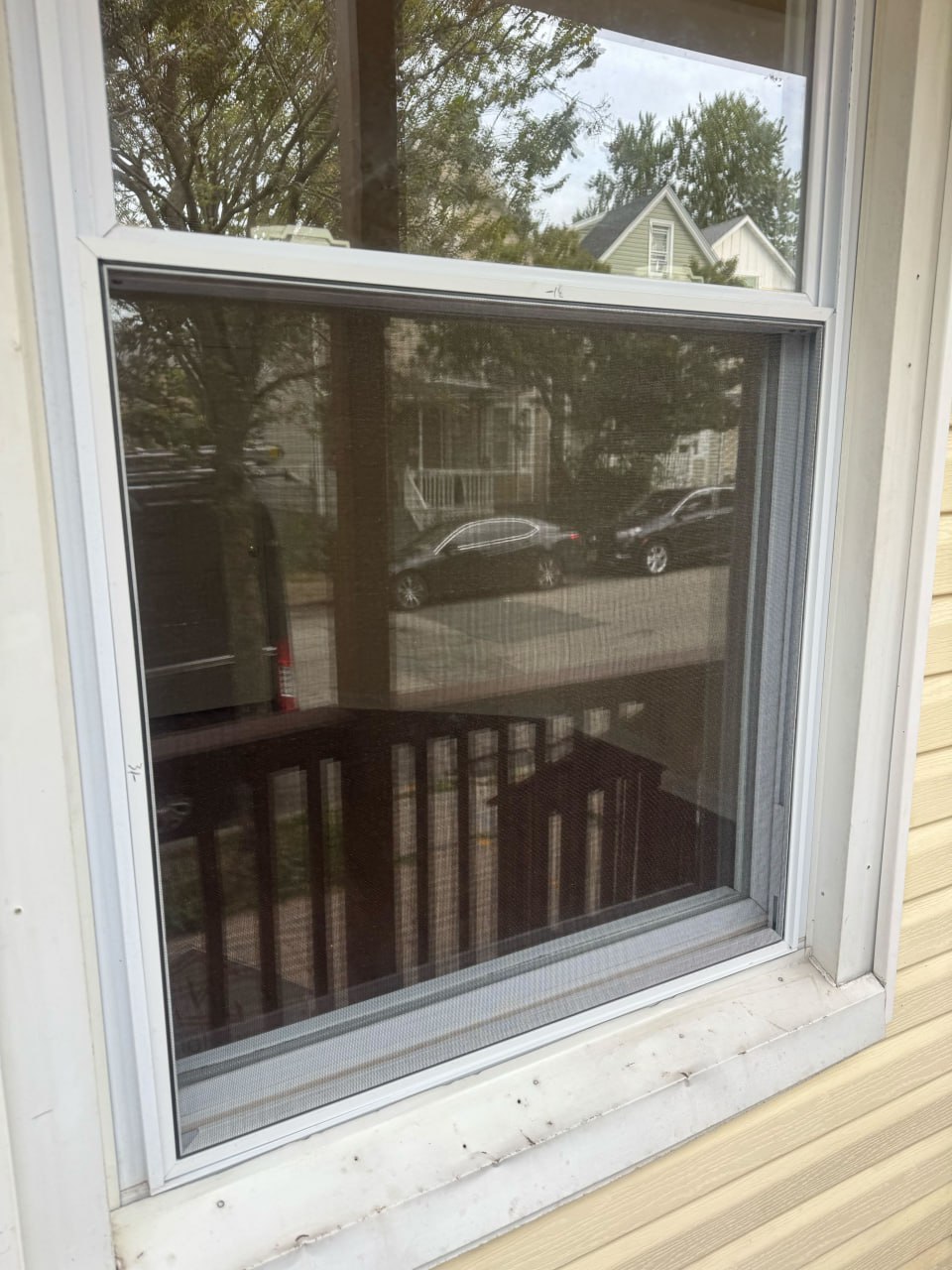
A torn screen does not automatically require a complete new frame. If the existing frame is straight, structurally sound and still fits the window correctly, re-screening is often the most economical repair.
Screen repair can include removal of damaged mesh, cleaning of the spline channel, installation of new mesh with appropriate tension, replacement of spline and service of compatible tabs, springs, corners or other hardware. If the frame is badly bent, corroded, cracked, missing components or no longer fits the opening, a custom replacement screen may provide the better result.
Custom Window Screen Replacement
When the original screen is missing or beyond repair, we can fabricate a new screen to the required dimensions and configuration. Custom screens are especially useful in NYC apartments and older buildings where off-the-shelf screen sizes rarely match the opening.
Accurate fabrication requires more than measuring overall width and height. Frame profile, thickness, retention method, spring location, pull tabs, clips and the way the screen seats into the window should be considered so the finished unit installs and removes correctly.
Re-Screening Existing Frames
Re-screening preserves a serviceable frame while replacing worn, torn or sagging mesh. The old spline and mesh are removed, the frame and spline channel are inspected, and new screening is tensioned and secured.
Correct tension matters. Mesh that is too loose can sag and look unfinished; excessive tension can distort a lightweight frame. Mesh and spline should be selected to work with the existing frame rather than forcing an incompatible combination.
Repair or Replace? How We Decide
Repair or re-screening is usually appropriate when
The frame still fits; mesh is torn or sagging; spline has deteriorated; pull tabs or small hardware are damaged; or the frame needs minor adjustment.
Replacement is often better when
The frame is severely bent, corroded or cracked; corners repeatedly separate; the screen is missing; the window has been replaced; the original profile cannot be restored; or the screen no longer stays securely in the opening.
A repair-first evaluation avoids replacing a complete screen when only mesh or hardware is defective.
Custom Screens by Window Type
Double-Hung Windows
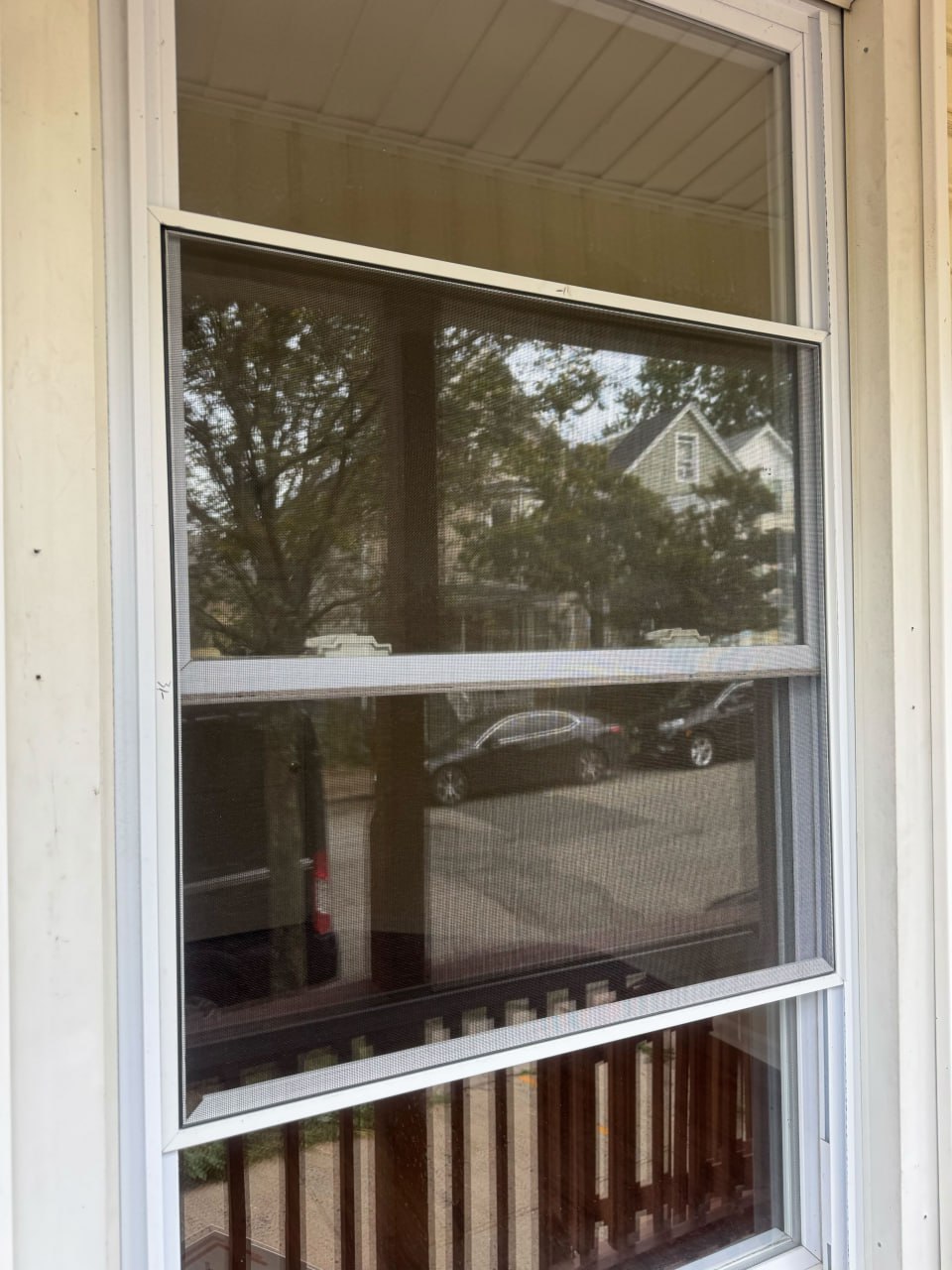
Double-hung windows commonly use removable exterior or interior insect screens depending on the window system. Replacement screens may rely on spring plungers, lift tabs, clips or manufacturer-specific retention details. We measure the opening and existing hardware configuration so the new screen fits securely without interfering with sash operation. For older wood windows and non-standard openings, custom fabrication may be required rather than a standard replacement.
Casement Window Screens
Casement windows typically use interior screens because the sash opens outward. Screen frames must fit around handles, operators and interior trim while remaining removable for cleaning and maintenance.
If a casement window is difficult to open, will not lock or has a failed operator, that is a window-hardware issue rather than a screen problem. See our Window Repair & Installation service.
Sliding, Awning, Hopper & Tilt-Turn Window Screens
Different window operating styles require different screen configurations. Sliding windows may use screens that move or lift within tracks; awning and hopper windows require screen placement compatible with the sash movement; tilt-turn systems can use interior, exterior or specialty screen solutions depending on the window design. For imported or European-style tilt-turn windows, screen compatibility should be evaluated from the actual frame rather than assuming a conventional NYC insect-screen profile will fit.
Historic & Brownstone Window Screens
Historic wood windows, brownstones and pre-war buildings often have openings that do not match modern stock screen sizes. Custom screens can be fabricated to accommodate unusual dimensions and existing window details while minimizing visual impact.
Where a property is landmarked or has preservation requirements, exterior appearance and attachment methods may need project-specific consideration. A removable insect screen is not the same as altering the historic window itself, but the building's requirements should still be respected.
High-Rise Apartment Window Screens
High-rise screen work requires careful handling and building coordination. Screens must be installed and secured correctly so they do not become loose at an elevated opening. Managed buildings may require certificates of insurance, approved work hours, elevator reservations or superintendent coordination. Window configuration and safe interior access should be reviewed before scheduling. Exterior access should never be assumed when the screen can be serviced from inside.
Screen Mesh Options
Fiberglass Screen Mesh
Fiberglass mesh is one of the most common insect-screen materials because it is flexible, corrosion resistant and provides good airflow and visibility for typical residential use. It is a practical choice for many apartment windows, but it is not the most damage-resistant option for pets, high-contact doors or other demanding locations.
Aluminum Screen Mesh
Aluminum mesh provides a more rigid metallic screen surface and can be selected where the client prefers metal screening or additional stiffness. Compared with fiberglass, aluminum can crease if sharply impacted and may show deformation rather than flexing back. Coastal, exterior and dissimilar-metal conditions should also be considered.
Pet-Resistant Screen Mesh
Pet-resistant mesh is designed for greater resistance to scratching and impact than standard insect screening. Heavy-duty vinyl-coated polyester products are commonly used for patio doors, lower windows and homes with dogs or cats. It is not indestructible, and heavier mesh may reduce visibility or airflow somewhat compared with lighter products.
No-See-Um & Fine Insect Mesh
No-see-um mesh uses a finer weave intended to reduce entry by very small insects. It can be useful near waterfronts, gardens and other locations where gnats or tiny insects are a recurring problem. A finer weave generally creates more resistance to airflow and may appear slightly more visible. It also cannot compensate for gaps around the screen frame; accurate fit remains essential.
High-Visibility & Ultra-Clear Screen Mesh
High-visibility mesh uses finer strands and an optimized weave to reduce the visual presence of the screen and improve outward views, which suits apartments with skyline, park or water views. Products vary by manufacturer in durability, openness and price; where pets or frequent contact are expected, visibility should be balanced against strength.
Solar & Privacy Screen Mesh
Solar screen fabrics can reduce solar heat gain and glare by blocking a portion of incoming sunlight before it reaches the interior. Privacy-oriented mesh can reduce daytime visibility into a space depending on lighting conditions. These products are not a substitute for insulated glass, Low-E coatings or complete window-performance upgrades.
Pollen & Specialty Screen Mesh
Specialty fabrics are available that capture more airborne particles such as pollen and dust than conventional insect mesh. Denser mesh can reduce airflow and visibility, and performance claims should be tied to the manufacturer's documentation for the specific product.
Sliding Screen Doors, Patio Doors & Retractable Screens
Sliding Screen Door Repair NYC
Sliding patio and balcony screen doors experience more mechanical wear than fixed window screens. Common problems include torn mesh, bent frames, worn rollers, damaged handles, failed latches, dragging doors and gaps along the bottom or sides. We evaluate the frame, rollers, track, handle/latch and mesh as one operating system. Proper roller adjustment matters because a door that drags or sits crooked can create insect gaps even when the mesh itself is perfect.
Patio & Balcony Screen Door Replacement
When a sliding screen door is severely bent, corroded, missing or incompatible with replacement hardware, a custom replacement may be required. The door should be measured to the actual track system, including height, width, frame profile, roller arrangement and handle/lock configuration. For balcony applications, building rules and safe access should be considered before removal and installation.
Screen Door Rollers, Tracks, Handles & Locks
A screen door that is difficult to slide may have worn or seized rollers, incorrect roller height, a damaged frame or debris/damage in the track. Broken handles and latches can also prevent the door from closing securely. Compatible hardware can often be replaced without rebuilding the complete door. If the track is part of the primary patio-door system and is damaged beyond routine adjustment, the scope may overlap with sliding-door repair (see Door Repair & Installation).
Retractable Screens
Retractable screens roll or fold into a housing when not in use, preserving the appearance of the doorway or opening. They can be useful for entry doors, French doors, large openings and spaces where a permanently visible screen is undesirable. System selection depends on opening size, mounting surface, door swing, threshold, wind exposure and how frequently the screen will be used.
French Door & Entry Door Screens
Conventional hinged screen doors can conflict with door swing, hardware or architectural appearance on French and entry doors. Retractable or paired systems can provide insect protection while remaining concealed when not in use. Screen hardware should not interfere with locks, closers or required door operation.
Commercial, Co-op, Condo & Property Manager Screens
Commercial Window & Door Screens
We provide custom screen repair and replacement for offices, schools, restaurants, multifamily buildings, property managers and other commercial properties. Projects can range from individual damaged screens to repeated fabrication across multiple windows or units. For larger quantities, a screen schedule can document opening location, dimensions, frame color/profile, mesh type and hardware, reducing field confusion and standardizing replacements across a property.
Co-op, Condo & Property Manager Screen Programs
Property managers and building staff often need to replace screens across multiple apartments over time. We can survey representative openings, identify differences between window types and develop a repeatable fabrication approach where practical. Older buildings may contain multiple generations of replacement windows, so one "building size" should not be assumed without verification.
OEM & Proprietary Window Screens
Some manufacturers use proprietary screen frames, corner keys, plungers, clips or profiles. In those cases, the best replacement may be an OEM screen or a custom-fabricated screen that accurately reproduces the required fit and retention method. If the window brand and model are known, send photos of labels, corners and attachment hardware. Exact OEM availability depends on manufacturer, product age and parts support.
Frames, Hardware, Fit & Maintenance
Bent Screen Frames & Broken Corners
Minor frame distortion can sometimes be corrected, but a severely bent extrusion may never sit flat enough to seal the opening properly. Repeatedly separated corners can also indicate damaged corner keys or a distorted frame. The goal is not simply to make the screen look square on a workbench; it must fit securely in the actual window or door without excessive gaps.
Spline, Springs, Pull Tabs & Screen Hardware
Small components often determine whether a screen stays in place and can be removed easily. Spline secures mesh in the frame channel, while springs, plungers, clips and pull tabs help position or remove the screen. Replacement hardware should match the frame and window configuration; improvised clips or oversized spline can damage lightweight frames or make future service difficult.
Screen Fit: Why Small Gaps Matter
Insects frequently enter around loose edges, corners or gaps between the screen and window frame rather than through the mesh. A new mesh panel will not solve the problem if the screen itself is undersized, warped or incorrectly retained. During installation, fit is checked around the perimeter, and the screen is tested for secure seating and practical removal and reinstallation.
Screen Cleaning & Maintenance
Periodic gentle cleaning can improve appearance and make small tears or loose edges easier to identify. Avoid aggressive pressure or sharp tools that can stretch mesh or damage spline, and keep sliding screen-door tracks reasonably clean so rollers can operate without resistance.
Screen Repair Cost & Timing
How Much Does Window Screen Repair Cost in NYC?
Pricing depends on size, whether the existing frame can be reused, frame profile, mesh type, hardware, quantity, access and whether on-site measurement or installation is required. Re-screening a sound standard frame is a different scope from fabricating a new oversized screen, replacing a sliding screen door or installing a retractable system. For an accurate estimate, send photos, approximate dimensions, quantity and the desired mesh type.
How Long Does Screen Repair or Replacement Take?
Timing depends on quantity, frame condition, custom fabrication, mesh selection, hardware availability and building access. Re-screening existing frames can be simpler than producing new custom frames or specialty retractable systems. We provide project-specific lead times once the screen type and quantity are confirmed.
Our Window & Door Screen Process
- Initial review. Send photos, approximate dimensions, quantity and the type of window or door.
- Repair vs. replacement assessment. Determine whether the existing frame can be reused or a new custom screen is required.
- Measurement. Verify frame dimensions, profile, retention hardware and door-track conditions where applicable.
- Mesh and hardware selection. Choose fiberglass, aluminum, pet-resistant, fine insect, high-visibility or another appropriate option.
- Fabrication/re-screening. Existing frames are re-meshed or new frames are fabricated to the confirmed configuration.
- Installation. Screens are fitted into the window or door; rollers and compatible hardware are adjusted where included.
- Fit and operation check. Perimeter gaps, secure retention, door movement and practical removal/reinstallation are reviewed.
Areas We Serve
NYC Glass & Window Repair provides window and door screen repair, replacement and custom fabrication throughout Manhattan, Brooklyn, Queens, the Bronx and Staten Island, with selected projects in Long Island and Westchester.
Manhattan service includes Midtown, Upper East Side, Upper West Side, Chelsea, SoHo, Tribeca, Greenwich Village and the Financial District. We also serve brownstones and apartments throughout Brooklyn, Queens high-rises, Bronx properties and Staten Island residences.
Why Choose NYC Glass & Window Repair for Screens?
Repair-first approach
Serviceable frames can be re-screened instead of automatically replaced.
Custom fabrication
Screens are measured for the actual window or door rather than limited to stock retail sizes.
Multiple mesh options
Standard fiberglass, aluminum, pet-resistant, fine insect, high-visibility and specialty screening where appropriate.
Window and door knowledge
Screen problems are distinguished from primary window, sash, operator, roller, lock and door-system problems.
NYC building experience
Apartments, co-ops, condos, brownstones, high-rises and managed properties.
Multi-unit capability
Screen schedules and repeat fabrication support property managers and larger projects.
Our Work
Frequently Asked Questions
Yes. If the frame is straight and fits correctly, the old mesh can often be removed and replaced while reusing the frame.
Replacement is usually preferable when the frame is badly bent, corroded, cracked, missing, no longer fits the opening or has damaged components that cannot be restored reliably.
Yes. A custom replacement can often be fabricated after the window or door is measured and the required frame profile and retention method are identified.
Pet-resistant polyester mesh is designed to withstand more scratching and impact than standard fiberglass mesh. It is especially useful for patio doors and lower windows, although no insect screen is completely damage-proof.
It is a finer-weave insect mesh designed to reduce entry by very small insects. The tradeoff can be somewhat lower airflow and visibility compared with standard mesh.
Yes. Depending on the system and parts availability, service can include mesh, rollers, handles, latches, alignment and compatible hardware. Severely bent doors may require replacement.
Yes. Retractable systems can be considered for entry doors, French doors and other suitable openings. The correct system depends on opening dimensions, mounting conditions and usage.
Often, yes. Custom fabrication is useful for brownstones, pre-war buildings, historic wood windows and non-standard openings where stock screens do not fit.
Depending on the model and age, the best solution may be OEM replacement or custom fabrication. Photos of labels, frame corners and screen hardware help identify the appropriate approach.
Yes. We can coordinate building access, COIs where required, repeated screen fabrication and multi-unit screen replacement projects.
Request a Window or Door Screen Estimate
For torn window screens, custom replacement screens, sliding patio screen doors, retractable screens or specialty mesh in New York City, send photographs of the screen and complete window or door, approximate dimensions, quantity and preferred mesh if known.
NYC Glass & Window Repair
224 W 35th St, Suite 500, New York, NY 10001
Phone: (646) 793-6444
Service area: Manhattan, Brooklyn, Queens, Bronx, Staten Island, Long Island and Westchester
Hours: Monday–Saturday, 8:00 AM–9:00 PM