Historic Window & Door Restoration in NYC
Restoration-first repair of original wood and steel windows and historic doors in brownstones, pre-war buildings, landmark properties and institutions.
Manhattan • Brooklyn • Queens • Bronx • Staten Island • Long Island • Westchester
Historic Window & Door Restoration in NYC
NYC Glass & Window Repair restores original wood and steel window systems and historic doors in brownstones, townhouses, pre-war apartment buildings, landmark properties, historic districts, schools, churches and commercial buildings.
Historic windows are repairable assemblies. Sashes, frames, muntins, glazing, pulleys, cords, chains, counterweights, hinges, operators and hardware can often be repaired individually rather than removing an entire original system. Our approach retains serviceable historic material while improving operation, weather resistance and durability where practical.
Planning a historic restoration? Call (646) 793-6444 and send photographs of the windows, doors, facade and existing conditions.
Why Restore Instead of Replace?
Original windows contribute to the proportions, profiles and character of an older building. Deterioration is often concentrated in individual components: loose glazing, failed sash cords, deteriorated paint, localized rot, corroded steel, worn hardware and air leakage can often be addressed through restoration.
Replacement may still be appropriate where deterioration is structurally extensive or an approved project requires replication. The decision should follow a condition assessment, not a blanket assumption that every old window must be replaced, or that every window can be saved.
Historic Wood Window Restoration
Wood Windows, Sash, Cord & Counterweights
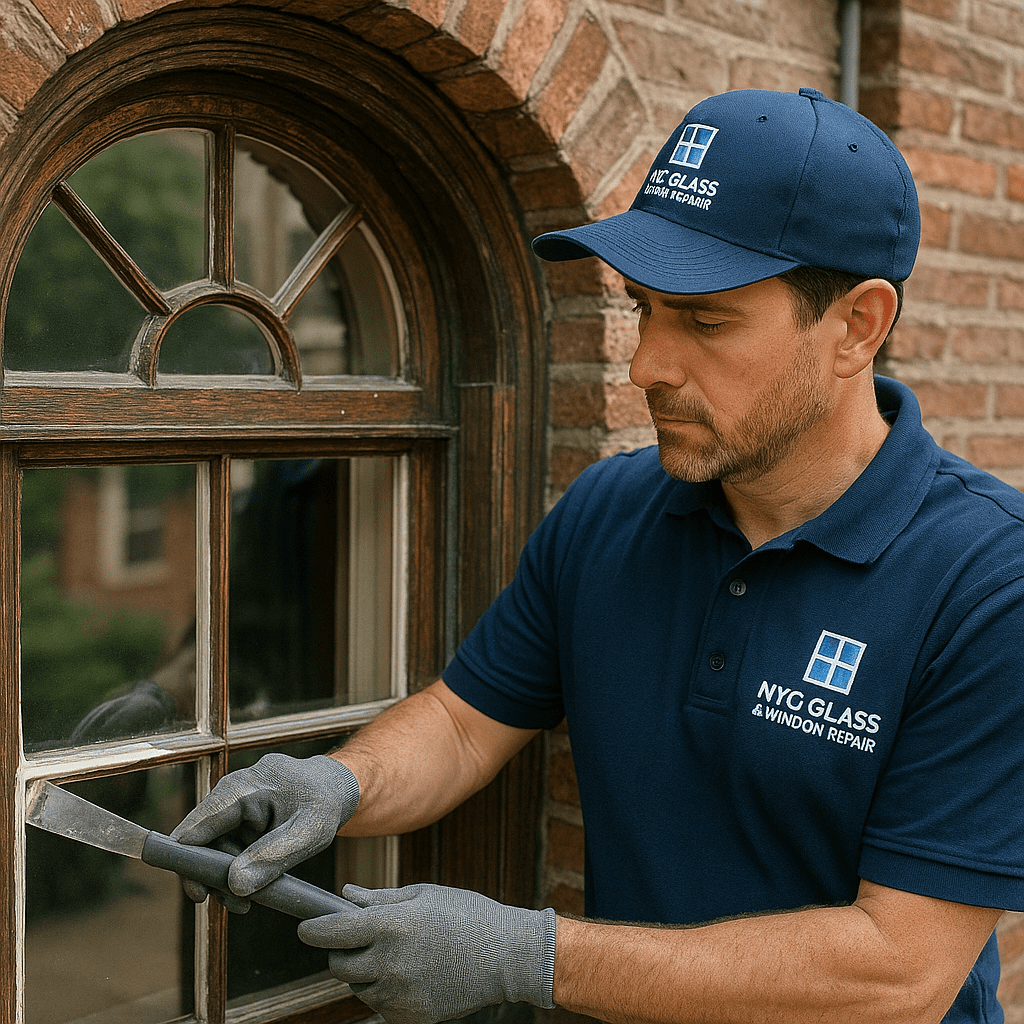
A double-hung sash can be removed, repaired, reglazed, rebalanced and returned to service while retaining its original material and profile. Scopes include sash and frame repair, wood consolidation, compatible wood repairs, glazing putty, paint preparation, weatherstripping, sash-cord or chain work, pulley and counterweight service, and hardware repair.
Wood Rot Repair & Consolidation
Not all visible rot requires replacing the sash or frame. Where sound material remains, localized deterioration can be removed and repaired; severely compromised members may need partial replication. The moisture pathway must be addressed, or patching will not last.
Glazing Putty & Historic Glass
Traditional putty secures glass and sheds water. We remove failed material, preserve serviceable original glass, replace broken panes and apply compatible glazing. Options include restoration-style glass, laminated or tempered glass, and carefully evaluated insulated solutions; added thickness and weight can affect profiles and balance.
Steel Windows & Historic Doors
Steel Casement Window Restoration
Steel casement and industrial windows are found in pre-war apartments, lofts, schools and landmark buildings. Restoration includes corrosion removal, rust treatment, localized steel repair, alignment, hinge and operator service, hardware restoration, glazing, perimeter sealing and coating preparation. Severe section loss or failed welds are evaluated individually.
Steel Hardware
Cremone bolts, stays, handles and operators may be obsolete. A window that seems frozen may be restricted by corrosion, paint or distorted parts. We evaluate cleaning and repair before compatible or custom-fabricated replacements.
Historic Door Restoration
We evaluate wood, steel and glazed entrance doors for finish deterioration, frame movement, damaged rails or stiles, failed glazing, worn hinges and weather leakage. Security, egress, accessibility and rated-assembly upgrades are evaluated for each specific opening.
Brownstones, Pre-War Buildings & Institutions
Brownstone & Townhouse Windows
Tall double-hung wood windows and decorative entrance assemblies define row-house facades. Common issues: failed cords, painted-shut sashes, deteriorated sills, loose glazing, drafts and past repairs that altered details.
Pre-War Co-ops & Condos
Buildings with dozens or hundreds of openings benefit from a systematic survey documenting window type, operation, glazing, condition, hardware and repair priority, helping boards separate urgent water-intrusion work from routine maintenance.
Schools, Churches & Institutions
Large quantities, occupancy and mixed materials call for planning around occupant protection, access, lead-safe practices, staging and coordination with the architect or facilities team.
Landmark Properties & LPC Coordination
Landmark properties and buildings in historic districts can be subject to Landmarks Preservation Commission requirements, particularly for visible exterior work. The approval path depends on the building, designation, visibility and exact scope.
We work from architect or preservation-consultant documents and provide field information, measurements, photographs, samples, restoration scopes and contractor coordination. Where an LPC filing is required, the owner and design or preservation professionals should confirm the filing strategy before work begins. Restoration does not automatically eliminate LPC review.
EPA Lead-Safe Work
Many historic buildings predate the ban on lead-based paint. Disturbing painted surfaces in covered pre-1978 properties should follow EPA Renovation, Repair and Painting requirements, including containment, dust control and cleanup.
Weatherstripping, Storm Windows & Noise
Historic windows can often be made more comfortable without removing the original sash. Air leakage may occur at meeting rails, sash edges, stops, frame joints and pulley openings. Improvements include compatible weatherstripping, sash adjustment, joint repair and perimeter sealing.
An interior storm window adds an air layer while leaving the historic window and facade unchanged, reducing drafts and often street noise. Acoustic and energy performance depend on glass makeup, air space, seals and surrounding construction, so we evaluate the existing assembly first.
Repair, Restore or Replicate?
Repair suits localized deterioration where the sash, frame, hardware or glazing remain largely intact. Restore is a more comprehensive scope, with disassembly, repair, reglazing, hardware work and weatherization while retaining significant original material. Replicate or replace applies when components are structurally beyond repair, missing or when an approved project calls for a historically compatible assembly, based on original profiles, operation and sightlines.
For larger properties, a documented condition survey categorizes each opening and becomes the basis for budgeting and phased restoration.
Why Choose NYC Glass & Window Repair
Restoration-first evaluation
Serviceable original material is considered before complete replacement.
Wood and steel capability
Historic sash, frames, glazing, hardware and metal casement systems.
Project documentation
Measurements, photographs and scopes for architect- and management-led projects.
Performance upgrades
Weatherstripping, glass and interior storms without automatically sacrificing character.
Our Process
- Existing-condition assessment. Identify type, materials, deterioration, operation, glazing and past alterations.
- Documentation. Photograph conditions and record dimensions, profiles and hardware.
- Preservation strategy. Determine what can be retained, repaired, restored or replicated.
- Approval coordination. Confirm building-management, architect and LPC requirements for the project.
- Mock-up where appropriate. Larger projects may benefit from an approved sample opening.
- Restoration. Perform wood or metal repair, glazing, hardware and weatherization.
- Final adjustment. Test operation and document the work as the project requires.
Our Work
Frequently Asked Questions
Yes, many can. Failed cords, loose glazing, localized rot, worn hardware, paint buildup, drafts and sash alignment problems can often be repaired while retaining substantial original material. Condition must be evaluated opening by opening.
No. Restoration may be appropriate and is often desirable where original material remains serviceable. Whether repair, restoration or replacement requires LPC review depends on the specific property and proposed work.
Yes. Work can include corrosion treatment, localized steel repair, hardware service, alignment, reglazing, sealing and coating preparation, depending on condition.
Yes. Traditional double-hung systems can often be re-corded or re-chained, with pulleys, weights and sash operation serviced at the same time.
Often, yes. Sash adjustment, weatherstripping, joint repair, perimeter sealing and interior storm windows can improve comfort while retaining original windows.
Yes. We evaluate whether serviceable original glass can be retained and select compatible replacement glazing when panes are broken or an upgrade is required.
The approval requirement and filing responsibility depend on the project. We coordinate with owners, architects and preservation consultants and provide contractor documentation, measurements, photographs and scope information.
Yes, subject to building requirements. Planning can include COIs, work-hour restrictions, protection, access, staging and coordination with management.
Request a Historic Restoration Assessment
Send photographs showing the full opening, exterior and interior conditions, damaged areas and hardware when possible.
NYC Glass & Window Repair
224 W 35th St, Suite 500, New York, NY 10001
Phone: (646) 793-6444
Service area: Manhattan, Brooklyn, Queens, Bronx, Staten Island, Long Island and Westchester
Hours: Monday–Saturday, 8:00 AM–9:00 PM